
7 Tips for Choosing an Electric Utility Vehicle?
Choosing an Electric Utility Vehicle can look simple when the brochure shows quiet operation, clean lines, and impressive battery claims. Real decisions are less polished. A vehicle that performs well on a warehouse floor may struggle on wet grass, steep paths, or uneven construction grounds. The right choice depends on how people, tools, and materials move every day.
Practical evaluation should begin with the working environment. Measure narrow gates, turning areas, loading zones, and storage space. Check the required payload, towing capacity, ground clearance, and expected travel distance. Battery range also deserves careful attention. Manufacturer estimates may change with hills, heavy loads, cold temperatures, and frequent stops. That detail is easy to overlook.
These seven tips connect specifications with daily use. They consider power systems, charging routines, safety equipment, maintenance access, operator comfort, and long-term operating costs. Experienced fleet managers often inspect service records and test vehicles before approving a purchase. A short demonstration can reveal awkward controls, poor visibility, or uncomfortable suspension. Small problems become expensive when a vehicle operates for eight hours each day.
No model fits every site. That assumption can be costly. Reliable guidance should come from manufacturer documentation, trained technicians, and verified user feedback. Local workplace requirements should also be reviewed before deployment. A thoughtful choice may not be the fastest or cheapest option. It should be dependable, practical, and suitable for the people using it. Even a careful evaluation can miss something. Regular reviews keep the decision honest.
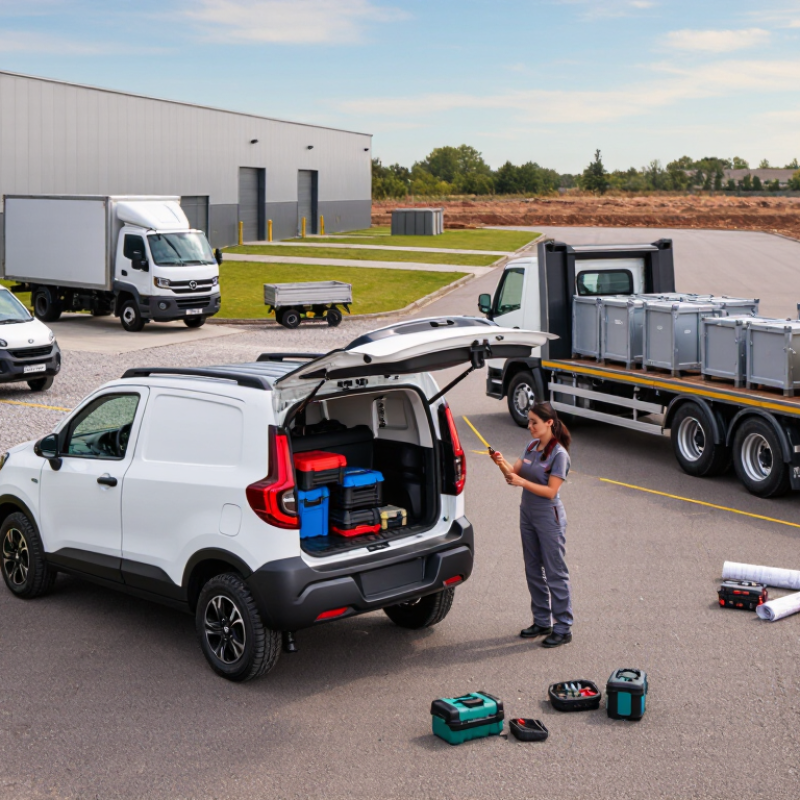
Define the Purpose and Work Environment
Choosing an electric utility vehicle starts with the job, not the vehicle. Define the daily task clearly. Will it carry tools, materials, people, or mixed loads? Record the heaviest realistic payload, travel distance, and number of trips per shift. A vehicle that performs well empty may struggle on slopes with a full load.
Start with the task. Conditions change. Examine the work environment closely. Measure aisle widths, turning areas, ramps, loading bays, and storage spaces.
Indoor facilities may require quiet operation and low exhaust exposure, while outdoor sites demand weather protection, ground clearance, and dependable braking. Dust, rain, uneven surfaces, and cold temperatures can affect range and control.
During practical evaluations, operators should test the vehicle with its normal equipment, not a light demonstration load. Test it loaded.
Operator feedback is valuable because workers notice awkward controls, poor visibility, and difficult entry points quickly. Maintenance staff should also review charging access, battery placement, inspection procedures, and likely downtime.
My first checklist once focused too heavily on payload and range. It missed turning space, which created delays in narrow service corridors. That mistake changed the evaluation process. A short workplace trial can reveal more than a polished specification sheet. Record travel speed, energy use, braking response, and operator comfort across a normal shift. Then compare those observations with site safety procedures and practical operating needs.
Compare Vehicle Capacity, Range, and Performance
When choosing an electric utility vehicle, compare capacity, range, and performance as one working system. A large cargo box is useless if payload limits reduce daily output. Check both payload and towing ratings. Then measure your typical load, including tools, water, and spare batteries. Leave a safety margin of at least 10 percent. Real work is rarely as tidy as a brochure.
Range deserves a practical test. Manufacturers may quote ideal figures, but cold weather, slopes, heavy loads, and frequent stops reduce distance. Record energy use across a normal route, not an empty parking lot. A vehicle traveling 60 miles unloaded may cover far less with a full bed. Ask whether the battery supports your longest shift and charging schedule. Overnight charging sounds simple. It may not fit every operation.
Performance should match the terrain. Compare acceleration under load, climbing ability, ground clearance, braking, and turning radius. Test the vehicle on wet grass, gravel, ramps, and narrow service lanes. Smooth torque helps when carrying fragile equipment. However, stronger performance can increase energy consumption. I once focused too heavily on top speed; it added little value during slow site work. That mistake changed my evaluation checklist. Review service access, battery replacement terms, and published test methods. Clear records make comparisons more trustworthy.
Evaluate Charging Options and Battery Requirements
Charging access can determine whether an electric utility vehicle works every day. Before choosing one, map its real operating route and charging location. Walk the route. Note steep slopes, long idle periods, and repeated stops. These details can consume more energy than a brochure suggests.
A workplace AC charger may suit vehicles that return overnight. A higher-power charger helps when shifts overlap or vehicles run continuously. However, faster charging may require electrical upgrades and professional installation. Ask an electrician to check the site’s available capacity, cable distance, weather protection, and emergency access. A standard wall outlet can be useful for backup, but it may charge too slowly for daily commercial work.
Battery sizing should match the full duty cycle, not just average mileage. Include payload, towing, cold weather, heating, tools, and traffic delays. Keep a practical reserve, often 15 to 25 percent, because field conditions rarely follow the test route. Usable battery capacity matters more than the headline figure. I once planned around an optimistic range estimate, and a cold, hilly route exposed the mistake. The vehicle finished, but the schedule became uncomfortable. Review charging records after the first month. Compare energy use per shift, charging time, and missed operating hours. A smaller battery may reduce purchase weight, while a larger pack can protect productivity. Neither choice is automatically better. Reliable decisions come from measured duty data, realistic charging windows, and a battery warranty that matches expected use.
Electric Utility Vehicle Charging Options
The chart compares representative charging input power and the estimated time required to add 25 kWh of energy, equivalent to approximately 100 km of range at an energy consumption rate of 25 kWh per 100 km.
AC Level 1 is suitable for overnight parking and low daily mileage. AC Level 2 is generally more practical for fleet depots, while DC fast charging supports higher utilization when vehicles need rapid turnaround. Actual charging times vary with battery size, vehicle charging limits, temperature, charging losses, and power tapering near a full battery.
Check Safety Features, Comfort, and Maintenance Needs
Choosing an electric utility vehicle starts with the worksite, not the brochure. OSHA reports about 85 annual fatalities and 35,000 serious injuries involving powered industrial trucks. Low-speed vehicles need similar discipline. Check seat belts, rollover protection, strong lighting, mirrors, horns, reverse alarms, and speed controls. A vehicle that feels stable on smooth ground may behave differently on wet gravel.
Tip 1: Test safety features with real operators. Ask them to enter, turn, reverse, and stop while wearing normal work clothing. The controls should remain visible and reachable. Do not ignore awkward steps. Small discomfort can become a daily injury risk.
Tip 2: Measure comfort during a full shift. Check seat support, vibration, legroom, weather protection, and steering effort. Tip 3: Review maintenance records before purchase. The U.S. Department of Energy’s Alternative Fuels Data Center notes that all-electric vehicles generally need less maintenance because they have fewer moving parts and no oil changes. However, batteries, tires, brakes, charging equipment, and cooling systems still need inspection. Record charging time and energy use under real workloads. Manufacturer estimates can be optimistic. A practical trial may reveal poor visibility, slow charging, or uncomfortable suspension. That is useful evidence.
Assess Total Cost, Reliability, and Supplier Support
Choosing an electric utility vehicle starts with the full operating bill, not its purchase price. Tip: Calculate total cost over five years. Include energy, tires, insurance, charging equipment, downtime, and battery warranty limits. The U.S. Department of Energy’s Alternative Fuels Data Center explains that electric vehicles generally need less maintenance because they have fewer moving parts. That advantage is real, but not automatic. Heavy loads, dust, and repeated short trips can accelerate tire and brake wear. A spreadsheet can still lie.
Tip: Test reliability under your actual route. Record payload, gradients, cold starts, charging queues, and usable range for at least two operating weeks. The 2024 BloombergNEF Battery Price Survey reported an average lithium-ion pack price of $115 per kWh, down 20% from 2023. Lower battery costs may improve replacement economics, yet pack availability and repair capability matter more than a headline figure. Ask for independent failure rates, diagnostic procedures, parts lead times, and documented performance in similar duty cycles. “Reliable” needs evidence.
Tip: Audit supplier support before signing. Require response times, technician coverage, software update responsibilities, training, and a clear escalation path. The International Energy Agency’s Global EV Outlook 2024 identifies charging access and grid readiness as practical barriers to fleet electrification. Inspect the proposed charger location at 6 a.m., not during a sales demo. Request a site-load study and backup operating plan. Some contracts look complete but omit mobile service, winter testing, or end-of-life battery handling. That omission deserves a second review.
7 Tips for Choosing an Electric Utility Vehicle? - Assess Total Cost, Reliability, and Supplier Support
| Tip | Evaluation Dimension | Practical Benchmark or Data Point | Why It Matters | Recommended Verification |
|---|---|---|---|---|
| 1. Calculate the total cost of ownership | Purchase price, energy, maintenance, financing, downtime, and residual value | Use a 5-year or 10,000-hour cost model. Include electricity at the local commercial tariff, scheduled service, tires, insurance, battery replacement assumptions, and resale value. | A lower purchase price may be outweighed by higher energy use, shorter component life, or lost productivity. | Request a line-item quotation and compare cost per operating hour and cost per kilometre under the same duty cycle. |
| 2. Match battery capacity to the work cycle | Usable battery energy, daily distance, payload, terrain, weather, and auxiliary loads | Calculate required energy as: daily distance × tested energy consumption, then add a practical reserve of about 15–20% for temperature, hills, traffic, and battery ageing. | Published range can differ significantly from real-world range when the vehicle carries heavy loads or operates on slopes. | Conduct a loaded route trial and record state of charge before and after the shift in representative conditions. |
| 3. Confirm charging compatibility | Charging power, voltage, connector, installation cost, and charging time | For a battery of approximately 30 kWh, a 7 kW charger requires roughly 4–5 hours in ideal conditions; actual time is longer because charging tapers near full capacity. | A vehicle that cannot recharge within the available parking window may require an additional unit or costly infrastructure upgrades. | Obtain a site electrical assessment and confirm charging performance at the intended supply voltage and ambient temperature. |
| 4. Evaluate reliability and maintainability | Drive motor, inverter, battery, brakes, suspension, seals, diagnostics, and service intervals | Prioritize clear preventive-maintenance intervals, accessible wear parts, onboard fault logging, and protection suitable for dust, water, vibration, and frequent stop-start use. | Reliability is determined by the complete vehicle system, not only by the motor or battery specification. | Review field failure data, warranty claims, maintenance records, diagnostic procedures, and references from similar operating environments. |
| 5. Check payload, towing, and safety margins | Rated payload, axle loads, towing capacity, gradeability, braking, visibility, and rollover protection | Select a vehicle whose rated payload exceeds the normal maximum load, including tools and occupants. Verify performance on the steepest route rather than on level ground only. | Operating continuously at the limit can increase tire, brake, suspension, and battery wear while reducing range. | Check certification documents, load charts, braking performance, safety equipment, and results from a fully loaded slope test. |
| 6. Measure supplier support and parts availability | Response time, technician coverage, spare-parts stock, training, software support, and warranty terms | Set written service targets, such as remote response within one business day, defined repair escalation, and agreed lead times for critical parts. | A vehicle can be technically capable yet economically unsuitable if a failed charger, controller, or battery immobilizes operations for weeks. | Review the warranty exclusions, parts catalogue, service network, technician qualifications, training plan, and emergency-contact process. |
| 7. Plan for battery life and end-of-life management | Battery chemistry, usable capacity, thermal management, warranty threshold, second life, and recycling | Compare warranty terms using measurable limits, such as years, operating hours, cycle count, and minimum retained capacity. Avoid evaluating warranty duration alone. | Battery ageing affects range, productivity, replacement cost, and the vehicle’s residual value. | Request battery health reporting, temperature-management details, replacement pricing, transport procedures, and documented recycling arrangements. |