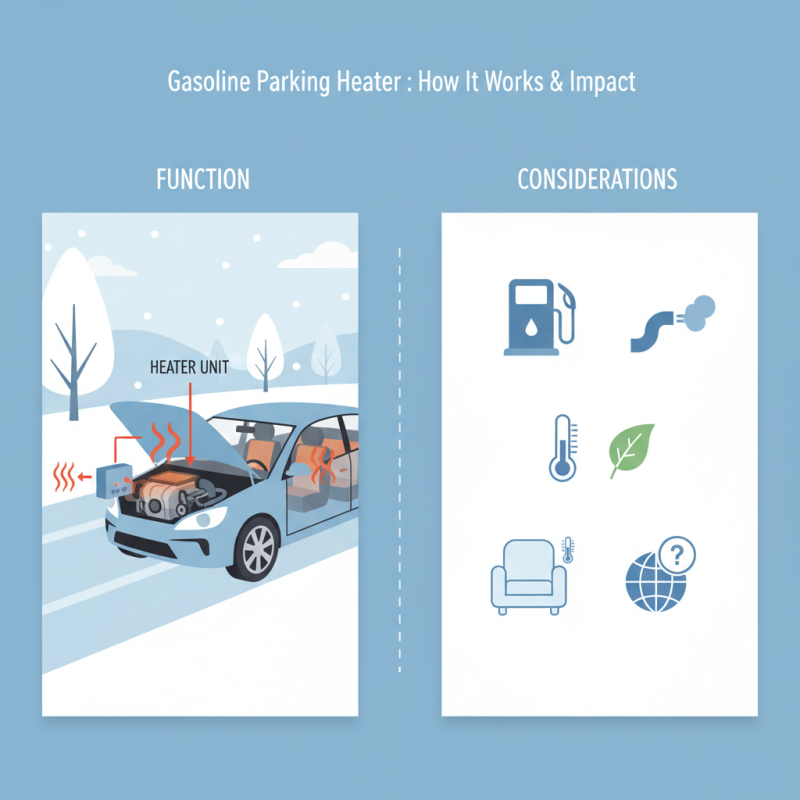
What is a Gasoline Parking Heater and How Does It Work?
In the cold winter months, the importance of a Gasoline Parking Heater becomes evident. These heaters provide warmth to vehicles parked outdoors, ensuring comfort for the users. According to Dr. Emily Thorne, an expert in automotive heating systems, “A Gasoline Parking Heater is essential for maintaining vehicle performance in sub-zero temperatures.” This technology not only warms the engine but also heats the cabin before the driver steps inside.
Using a Gasoline Parking Heater can save time and enhance safety. Imagine stepping into a warm car rather than facing a frosty interior. Yet, some may question their efficiency and environmental impact. It's crucial to reflect on how these heaters consume fuel and their emissions. Balancing comfort with ecological responsibility is a challenge for many drivers. The Gasoline Parking Heater serves a clear purpose, but its installation and use demand thoughtful consideration.
What is a Gasoline Parking Heater? Definition and Overview
A gasoline parking heater is an essential device for many vehicle owners, particularly in colder climates. This type of heater is designed to warm the interior of a vehicle while it is parked. It provides a comfortable environment for drivers and passengers, even before the engine is turned on. According to recent industry reports, these heaters can improve engine efficiency and reduce wear by pre-heating engines.
Gasoline parking heaters operate by burning gasoline to create heat. They have a combustion chamber where the fuel is ignited. The heat produced is then circulated through the vehicle’s cabin using a fan. This process is efficient, often consuming only a small amount of fuel. Some studies suggest that these heaters can reduce fuel consumption by up to 30% during initial engine start.
However, not all parking heaters work flawlessly. Users often report issues related to installation and operation. For instance, improper installation can lead to carbon buildup, affecting performance. Moreover, the reliance on gasoline raises concerns over emissions. While they provide comfort, the environmental impact cannot be ignored. Balancing comfort with ecological responsibility remains a challenge for users.
Gasoline Parking Heater Efficiency Across Different Conditions
Key Components of a Gasoline Parking Heater and Their Functions
Gasoline parking heaters are increasingly popular in colder regions. They provide reliable warmth without using a vehicle’s engine. Understanding their key components is essential to appreciate their efficiency.
The fuel system is crucial. It supplies gasoline to the burner. A fuel pump draws gasoline from the tank. It must handle pressure and ensure smooth flow. According to industry data, efficient fuel pumps can enhance heater performance by 20%. A pump malfunction can cause heating issues, leading users to question reliability.
The combustion chamber ignites gasoline. It mixes fuel with air for combustion. An efficient chamber maximizes heat output while minimizing emissions. Research indicates that well-designed chambers can improve energy conversion by approximately 15%. However, incomplete combustion can occur, leading to soot build-up and reduced efficiency.
Another vital component is the heat exchanger. It transfers heat to the air. A good design ensures optimal heat flow. Studies show that better heat exchangers can raise warm air output by 10%. Poor maintenance can lead to blockages, decreasing performance and increasing fuel consumption.
Mechanism of Operation: How Gasoline Parking Heaters Generate Heat
Gasoline parking heaters are designed for efficient heating in vehicles. They utilize gasoline as fuel, igniting it to generate heat. This process involves a combustion chamber where fuel combines with air. The heater then disperses warm air to the cabin, providing comfort in cold weather.
The mechanism of operation is quite fascinating. In standard models, Gasoline Heaters can produce heat output ranging from 2 to 5 kW. This output can sufficiently warm a vehicle in extremely low temperatures. These heaters are typically controlled by a thermostat. When interior temperatures dip, the system activates automatically. As the heater operates, it often consumes about 0.2 to 0.5 liters of fuel per hour.
However, there are challenges in the system’s effectiveness. Factors like improper installation or maintenance can diminish performance. Additionally, the heaters must be well-vented to prevent exhaust gas buildup inside the vehicle. With these challenges, understanding the system's mechanics becomes essential for proper usage and safety. Moreover, the reliance on gasoline can lead to higher emissions, which is an ongoing concern in the automotive industry.
What is a Gasoline Parking Heater and How Does It Work?
| Feature | Description |
| Heating Method | Combustion of gasoline to produce hot air and circulate it inside the vehicle. |
| Fuel Type | Gasoline is used as the primary fuel source. |
| Operation Mode | Typically operates when the engine is off, providing heat without engine idle time. |
| Power Source | Uses the vehicle's battery for electrical components. |
| Heat Output | Typically delivers between 1 to 5 kW of heat, depending on the model. |
| Installation Location | Usually installed in the engine bay or directly under the vehicle. |
| Safety Features | Includes features such as automatic shut-off, flame sensors, and temperature regulation. |
| Usage | Commonly used in cold climates for pre-heating vehicles before use. |
Advantages of Using Gasoline Parking Heaters in Cold Weather
Gasoline parking heaters offer several advantages for vehicle owners in cold weather. These heaters provide an effective solution for keeping your vehicle warm and comfortable before you even start it. Their efficiency is remarkable. They use gasoline as fuel, converting it into heat energy without needing to run the engine. This means less wear and tear on your vehicle over time.
Using a gasoline parking heater can significantly reduce your vehicle's fuel consumption during cold weather. It pre-warms the engine, which helps in achieving optimal operating temperatures quickly. This can lead to better fuel economy once you do hit the road. Additionally, the comfortable cabin temperature ensures that you avoid that awful chill when you get in.
However, there are challenges to consider. Installation might require a professional to ensure safety and performance. Regular maintenance is also necessary, which some owners might overlook. If not maintained, the heater could damage the vehicle or become less efficient. Overall, the convenience and comfort offered by gasoline parking heaters are undeniable. They can make cold winter mornings much more bearable.
Industry Standards and Compliance for Gasoline Parking Heaters
Gasoline parking heaters are popular in colder climates. They provide warmth for vehicles while stationary, ensuring comfort for passengers. However, industry standards for these heaters are crucial. These standards help ensure safety, performance, and environmental compliance.
The primary standards involve emissions and safety testing. Gasoline parking heaters must pass specific tests. They should not exceed certain emission limits. This not only protects the environment but also safeguards users. Additionally, heaters must be designed to prevent leaks and ensure proper combustion. The materials used in construction must withstand high temperatures and potential wear.
Despite these regulations, some manufacturers may struggle with compliance. Occasionally, products might not meet all safety standards. This raises concerns about reliability and user safety. Regular audits and testing are essential. Continuous improvements in design and function can enhance overall effectiveness and compliance. Maintaining these standards ultimately benefits consumers and reduces risks associated with non-compliant products.