What are the Best Solar Applications for Global Buyers?
The world of Solar Applications is rapidly evolving. Experts predict an impressive growth in this sector. John Smith, a solar energy analyst, emphasizes, “Solar Applications will redefine how we harness renewable energy.” Buyers globally are seeking effective solutions to integrate solar technology into their lives.
Solar applications range from residential power systems to large-scale solar farms. Each application has unique benefits. Homeowners can harness solar power for daily energy needs. Businesses can utilize solar to reduce operating costs and improve sustainability. These solutions are becoming essential in the current energy landscape.
However, the adoption of solar applications is not without challenges. The initial investment can deter potential buyers. Additionally, technology is developing quickly, leading to concerns about future-proofing. Buyers must navigate these complexities while exploring their options. Understanding the full spectrum of solar applications is crucial for informed decisions.
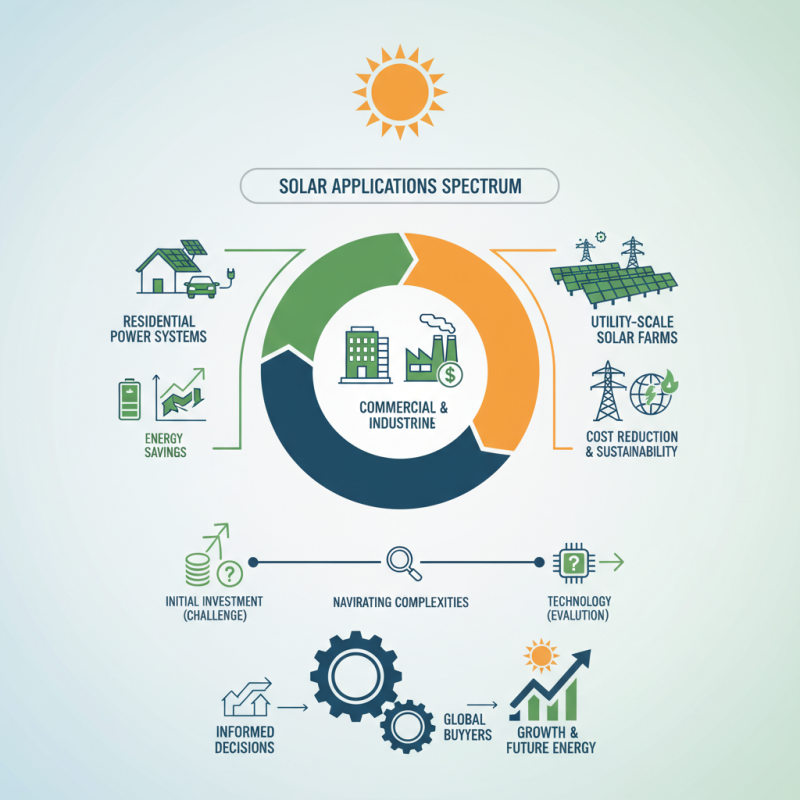
Overview of Solar Applications for Global Markets
In recent years, solar applications have gained popularity across the globe. This shift is driven by the need for sustainable energy solutions. According to a report by the International Energy Agency (IEA), solar energy could account for 30% of global electricity generation by 2030. This is a significant increase from 10% in 2020. Countries are investing heavily in solar projects to cut greenhouse gas emissions and enhance energy security.
Residential solar systems are a prominent application in many markets. Homeowners are increasingly opting for solar panels, not just for cost savings, but also for energy independence. A study from the U.S. National Renewable Energy Laboratory indicates that owning a solar system can reduce energy bills by up to 50%. Commercial applications are also on the rise. Businesses can leverage solar energy to lower operational costs and enhance their sustainability image.
Tips: When considering solar applications, evaluate local incentives and rebates. These can significantly reduce initial costs. Also, consider solar storage solutions. With battery systems, users can maximize their energy efficiency.
However, challenges persist. Issues such as high upfront costs and regulatory hurdles can deter adoption. It's vital to research and assess local market conditions. This ensures the chosen solar solution aligns with specific needs and goals.
What are the Best Solar Applications for Global Buyers? - Overview of Solar Applications for Global Markets
| Application | Description | Market Potential | Popularity by Region |
| Residential Solar Panels | Solar panels installed on residential rooftops to generate electricity for home use. | High | North America, Europe |
| Solar Water Heating | Systems that use solar energy to heat water for residential and commercial use. | Medium | Asia, Middle East |
| Solar Street Lighting | Solar-powered lights for public streets and pathways that operate independently of the grid. | Medium | Africa, South America |
| Off-Grid Solar Systems | Solar solutions providing electricity to remote areas without access to the grid. | High | Rural areas globally |
| Solar Farms | Large scale solar installations that generate electricity for distribution to the grid. | Very High | Worldwide |
Residential Solar Solutions: Benefits and Installations
Residential solar solutions offer numerous advantages for homeowners. They reduce electricity costs significantly. Many users report a drop in monthly bills. A typical system can cover most of a household’s energy needs. Moreover, solar energy is renewable. This means you rely less on fossil fuels. The environmental impact is a positive aspect that resonates deeply with eco-conscious families.
Installation is a crucial step that can be daunting. It requires careful planning and understanding. Homeowners need to assess their roof's angle and sun exposure. Unforeseen obstacles can arise during the installation process. It's common for contractors to encounter structural issues. Thorough preparation can mitigate these risks. Hiring qualified professionals is key for a successful installation. Their expertise ensures the system operates optimally.
Understanding local regulations is another vital aspect. Regulations can vary greatly from one area to another. Homeowners must ensure compliance to avoid fines. Many municipalities offer incentives for solar installations. However, navigating these can be overwhelming. Seeking advice from experts can ease this process. A well-informed decision can lead to long-term benefits.
Commercial Solar Systems: Advancements and Cost Savings
Commercial solar systems are transforming the energy landscape. Many businesses have adopted solar technology to reduce their power bills. These systems can significantly cut operational costs while benefiting the environment.
Recent advancements make solar installations more efficient. With improved photovoltaic cells, businesses can generate more energy from the same amount of sunlight. Enhanced battery storage options allow companies to store excess energy. This results in less reliance on the grid. However, installation costs can still be high. Businesses must carefully analyze their budgets.
While solar systems offer substantial savings, the initial investment can be daunting. Some companies may struggle to find the right financing options. Others might hesitate due to maintenance concerns. It is crucial for buyers to seek expert guidance. Reliable consultants can help navigate these challenges.
Innovative Technologies in Solar Energy Storage
Innovative technologies in solar energy storage are transforming how we harness renewable energy. As the demand for efficient solar solutions rises globally, innovative storage methods are gaining attention. Advanced lithium-ion batteries are popular, but there's much more to explore. Emerging solid-state batteries promise higher energy density and enhanced safety. They could revolutionize energy storage in the coming years.
Another exciting development is flow batteries, which offer a longer life cycle and scalable capacity. Unlike traditional batteries, they use liquid electrolytes, making them less prone to degradation. This characteristic is essential for large-scale applications, where longevity matters. However, current technologies still have issues with efficiency and cost.
Investments in research and development are crucial for overcoming these challenges. Energy storage systems must become more affordable and efficient to compete with fossil fuels. The future relies heavily on finding sustainable, reliable solutions for global buyers. Balancing innovation with practicality will shape the next phase of solar energy applications. As we explore these technologies, continuous reflection on limitations will guide more effective advancements in this vital field.
Global Trends in Solar Energy Utilization and Adoption
The global adoption of solar energy is accelerating at a remarkable pace. As countries strive for sustainable energy solutions, the demand for solar technologies is on the rise. Many regions now harness solar power to reduce reliance on fossil fuels. This shift is not just about energy; it reflects a larger movement toward sustainable living.
Trends show diverse applications of solar technology. Homeowners are installing solar panels to cut electricity bills. Businesses are investing in large-scale solar farms for cost efficiency. Developing nations are utilizing portable solar solutions to provide electricity in rural areas. Despite these advancements, challenges remain. The integration of solar energy into existing grids can be complex. Some regions lack the infrastructure needed for widespread solar adoption.
More data-driven strategies are needed. A solid understanding of local conditions is essential. Policymakers must consider economic, environmental, and social factors. Engaging communities can drive acceptance and innovation. Collaboration between sectors may lead to breakthroughs. Continuous research is crucial in addressing inefficiencies and improving solar technologies. The journey toward a solar-powered future is ongoing and requires collective effort.