What is a Bare Shaft Ball Valve and Its Advantages?
Bare Shaft Ball Valves are innovative devices in fluid control systems. These valves differ from conventional ones by lacking a mounted actuator. This unique design offers several advantages in various applications. They are often used in industries like oil and gas, water treatment, and power generation. Their simplicity can lead to easier maintenance and reduced costs.
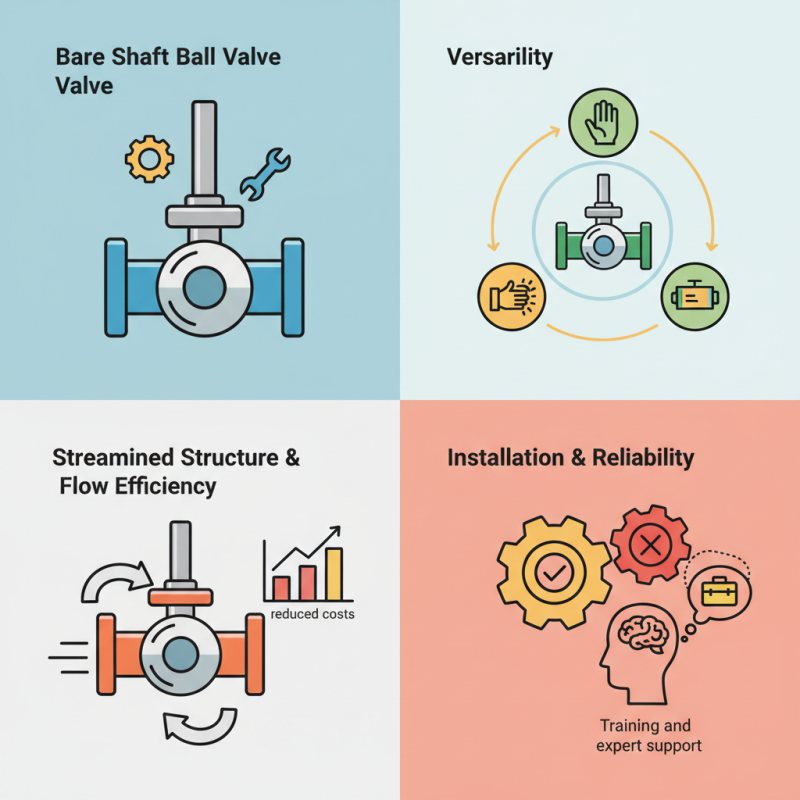
One of the main benefits of Bare Shaft Ball Valves is their versatility. They can be operated manually or with different actuator types. This flexibility allows for customization to meet specific system requirements. Additionally, their streamlined structure improves flow efficiency. However, reliance on external actuators means proper selection and compatibility are crucial.
While Bare Shaft Ball Valves present notable advantages, users should be aware of potential installation challenges. Correct alignment and support are essential for optimal performance. Failures in these areas can lead to inefficiencies. Thus, proper training and support from experts enhance reliability. Understanding these aspects is key to leveraging the full potential of Bare Shaft Ball Valves in various applications.
What is a Bare Shaft Ball Valve? Definition and Functionality
A bare shaft ball valve is a type of valve used primarily in industrial applications. It features a simple design without a housing or actuator. This simplicity allows for easy operation and maintenance. The valve relies on an operator, often a manual lever or pneumatic actuator, linked directly to the valve stem.
One of the main functionalities of a bare shaft ball valve is its ability to handle high flow rates with minimal pressure loss. Reports indicate that these valves can achieve flow coefficients (Cv) that rival those of other valve types. According to a study by the American Society of Mechanical Engineers (ASME), bare shaft ball valves can provide up to 70% flow efficiency compared to traditional valves. Their reliable sealing capability ensures leakage is kept to a minimum, making them suitable for sensitive applications.
While bare shaft ball valves bring several advantages, there are considerations to keep in mind. Without an outer casing, they can be more vulnerable to environmental factors, which could impact their longevity in harsh conditions. Maintenance protocols are necessary to ensure optimal performance. Users should evaluate specific operating environments to determine whether the benefits outweigh the potential drawbacks.
Key Components of a Bare Shaft Ball Valve and Their Roles
A Bare Shaft Ball Valve is designed with simplicity in mind. Its essential components include the ball, seat, stem, and body. Each plays a critical role in the valve's operation. The ball provides the sealing mechanism, rotating smoothly to permit or restrict flow. Industry reports show that a high-quality ball can last over 20 years, depending on usage and maintenance.
The seat material is crucial for durability. Common options include PTFE and metal alloys, which enhance corrosion resistance. A well-designed seat can reduce leakage rates significantly, often under 0.01% of flow. Additionally, the valve's body, usually forged or cast, supports internal pressure without compromising structural integrity. A robust body reduces operational risks in high-pressure systems.
Understanding these components helps operators make informed choices. Some users overlook the importance of regular maintenance. Neglecting wear on the ball or seat may lead to inefficiency and safety risks. Identifying and replacing worn components can dramatically extend a valve's lifespan. Regular inspections are not merely recommended but essential for maintaining reliability in critical applications.
What is a Bare Shaft Ball Valve and Its Advantages? - Key Components of a Bare Shaft Ball Valve and Their Roles
| Component | Description | Advantages |
| Body | The main structure that houses the valve components. | Durability and resistance to high pressures and temperatures. |
| Ball | A spherical closure element that controls flow. | Offers excellent flow control and has low friction losses. |
| Seats | The sealing elements that sit between the ball and body. | Provides excellent sealing performance and reliability. |
| Stem | The component that connects the handle or actuator to the ball. | Ensures smooth operation and reduces maintenance needs. |
| Actuator | The mechanism that operates the valve (manual or automated). | Increases operational efficiency and can be integrated into systems. |
| Handle/Lever | A manual control device for the valve. | Easy to operate and enables quick valve operation. |
Comparison of Bare Shaft Ball Valves and Standard Ball Valves
Bare shaft ball valves and standard ball valves serve similar purposes but differ significantly in design and functionality. A bare shaft ball valve features a straightforward design with no actuators or additional components. This simplicity allows for easier customization based on user needs. In contrast, standard ball valves often include mechanisms for automated control, adding complexity and potential points of failure.
One major advantage of bare shaft ball valves is their ease of maintenance. With fewer parts involved, troubleshooting becomes less cumbersome. Standard valves may require specialized tools and techniques for servicing, leading to higher costs and downtime. However, the lack of built-in automation in bare shaft valves means operators must rely on manual intervention. This can prove challenging in high-traffic or remote installations where automation would increase efficiency.
Bare shaft valves also provide greater adaptability in various applications. They can be paired with different actuators depending on the specific requirements. This flexibility is a double-edged sword, as it demands careful selection of compatible components to ensure optimal performance. Standard ball valves, while less flexible, offer an all-in-one solution that may be more suitable for those seeking convenience. Balancing the benefits and drawbacks of each design is crucial for informed decision-making in valve selection.
Advantages of Using Bare Shaft Ball Valves in Industrial Applications
Bare shaft ball valves are increasingly popular in industrial settings. They provide a simple yet effective means of controlling fluid flow. Unlike traditional valves, these units lack external actuators. This design can simplify installation and maintenance in various applications.
One key advantage is their lightweight nature. This feature often reduces structural load on pipelines. Additionally, bare shaft ball valves tend to have fewer components. This can lead to lower chances of failure. Their direct mounting for actuators enhances responsiveness. In critical processes, this can save time and reduce leaks.
Another aspect to consider is adaptability. Bare shaft ball valves can easily integrate into existing systems. Their versatility allows for quick adjustments based on operational needs. However, while they shine in many scenarios, they may not be ideal for all environments. Certain aggressive fluids or extreme temperatures may challenge their performance. Understanding these limitations is crucial when selecting valves for specific industrial applications.
Advantages of Bare Shaft Ball Valves in Industrial Applications
Industry Applications and Performance Benefits of Bare Shaft Ball Valves
Bare shaft ball valves play a crucial role in various industries due to their unique design. These valves are often favored for their robust structure and simplified operation. Unlike conventional valves, they have no external actuator, allowing for direct manual control or easy integration with power sources. This simplicity reduces potential points of failure and enhances reliability in demanding applications.
In the petrochemical sector, for instance, bare shaft ball valves handle corrosive substances safely. They have strong seals and sturdy bodies, which maintain integrity under high pressures. In water treatment plants, these valves efficiently manage flow control. Their low maintenance needs make them attractive, reducing downtime and operational costs.
However, users must approach bare shaft ball valves with care. A lack of an actuator can complicate automated processes. Manual operation requires skilled personnel, increasing the need for adequate training. Additionally, while these valves are durable, environmental conditions can impact performance. Understanding these factors is key to maximizing their advantages.